· Joel Guevara · 2 min read
Financial AI: The Real Competitive Leap Starts in 2025
The global artificial intelligence market in financial services is projected to reach $39 billion by 2032. We analyze how AI is transforming fraud prevention, process automation, regulatory compliance, and operational efficiency in the financial sector.
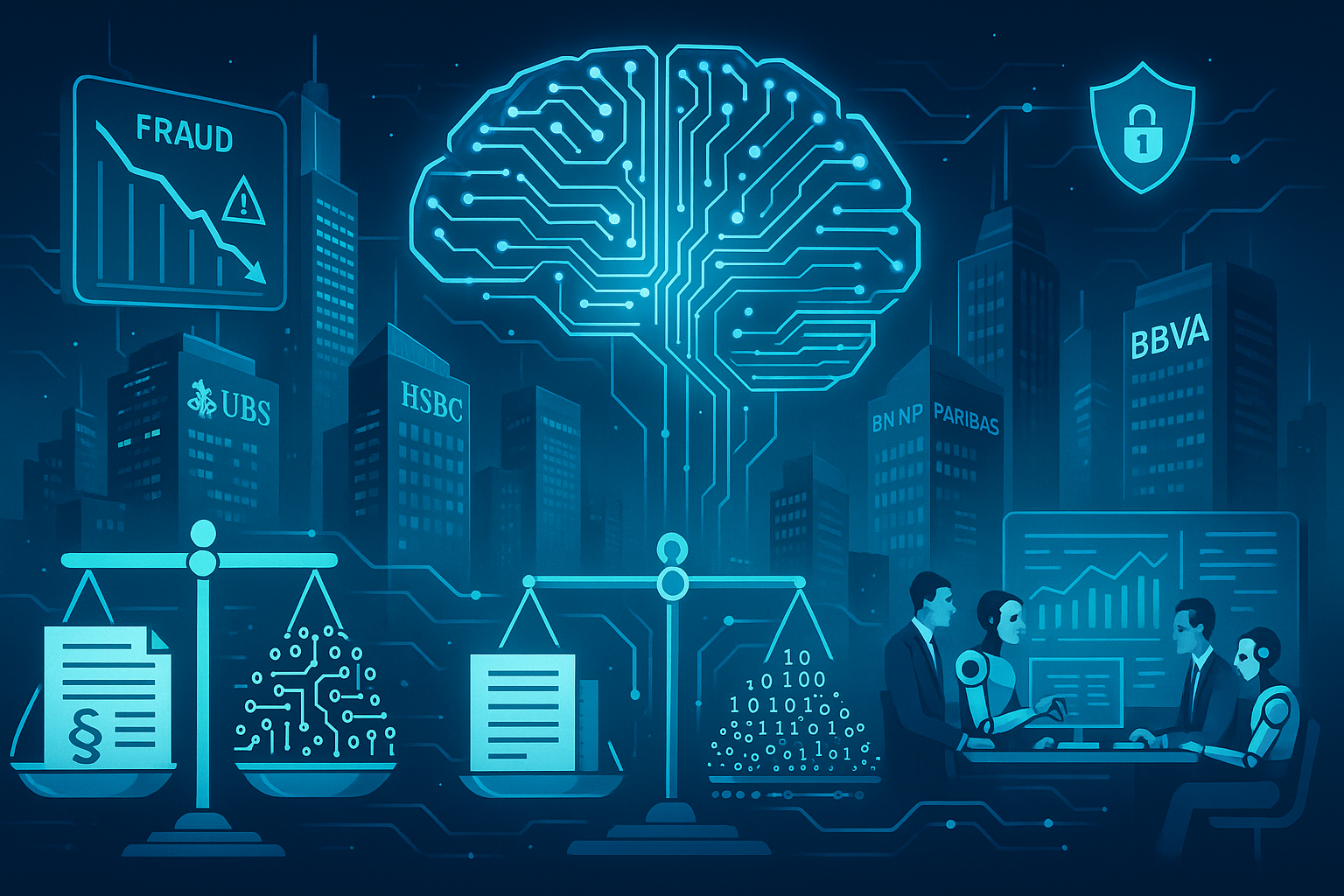
The global artificial intelligence market in financial services is projected to reach $39 billion by 2032, representing 350% growth from 2023, according to Funds Society. European banks including UBS, HSBC, BNP Paribas, and BBVA lead global innovation indexes in AI adoption.
Fraud Prevention with AI
Machine learning systems analyze massive transaction volumes in real-time to identify suspicious patterns. According to El Economista, AI adoption has enabled companies to reduce fraud attempts by up to 86% in electronic transactions. Visa’s AI system prevented $40 billion in fraudulent transactions globally in 2023.
Advanced payment platforms now recognize buyers in 90% of cases through data analysis, even on first purchases. By detecting unusual behavior, systems proactively deny suspicious operations while reducing false positives.
Automation of Financial Processes
Institutions increasingly deploy AI for repetitive back-office tasks, including document processing and accounting reconciliation. Customer onboarding costs can decrease approximately 40% through AI implementation. The technology handles KYC/AML checks automatically, freeing employees for higher-value strategic work.
Regulatory Compliance with AI
Traditional rule-based software generated overwhelming alert volumes, with 90-95% being false positives. AI refines detection by identifying hidden transaction patterns and customer relationships. Banks can reduce compliance alerts by 45-65% while maintaining 99% detection of genuinely suspicious cases.
AI accelerates regulatory reporting, with some entities generating financial reports five times faster, improving IFRS and Basel compliance.
Operational Efficiency and Competitiveness
CaixaBank’s technology plan will invest 5 billion euros between 2025-2027, leveraging AI for personalized advisory services and new financial offerings. Measurable benefits include 40% reduction in customer onboarding costs and 50% decrease in compliance incidents.
Regulatory Frameworks
The European Union is finalizing a pioneering AI Regulation covering high-risk applications like credit-scoring algorithms and general-purpose systems. Spain established an AI Supervision Agency and regulatory sandbox in 2024.
The Bank for International Settlements and Basel Committee emphasize maintaining human controls and bias correction in automated processes affecting customers.
ALS Innovation’s Role
ALS Innovation combines data analysis expertise with banking knowledge to help financial entities adopt AI technologies that enhance efficiency, security, and compliance while adapting to current sector challenges.